
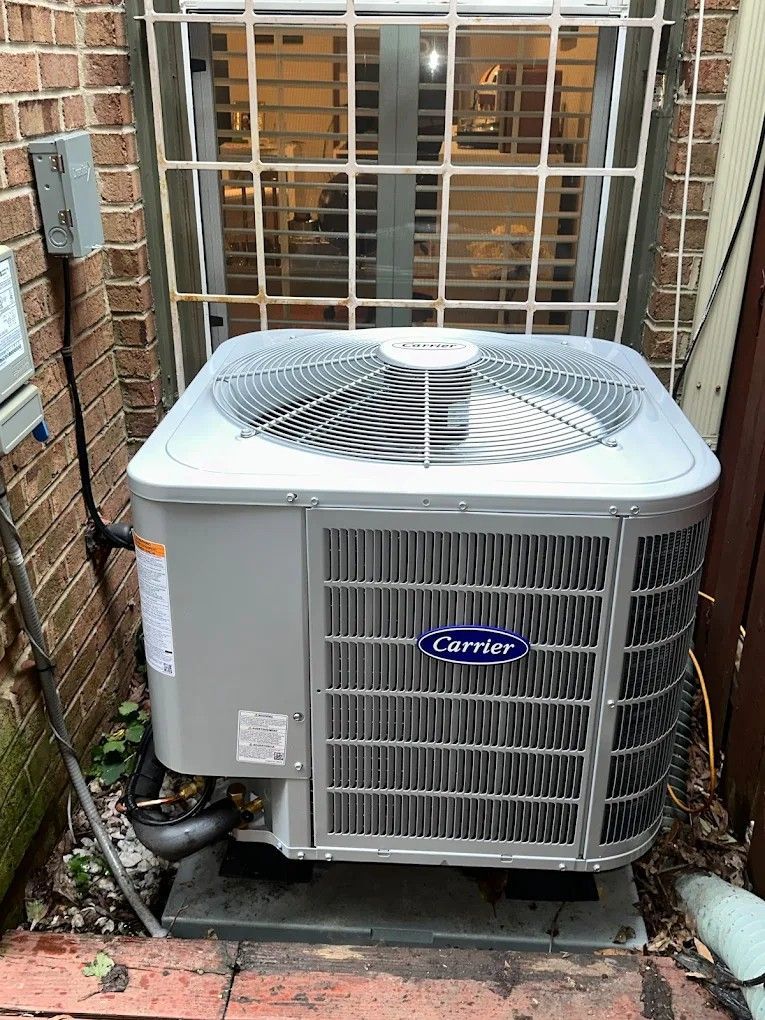
Cooling Systems Matched to Actual Load
A/C Installation in Silver Spring for properties replacing failed units or upgrading to handle summer heat and humidity
Hot, humid summers in Silver Spring push air conditioning systems hard from June through September, and undersized or aging equipment struggles to maintain comfortable indoor temperatures when outdoor conditions peak. C&V Home Services installs new air conditioning systems and replaces worn-out units for homeowners and property managers who need reliable cooling that handles the region's summer climate without running continuously or failing mid-season. Proper installation starts with calculating the building's actual cooling load rather than simply matching the old unit's tonnage, because previous equipment may have been incorrectly sized or the building's insulation and window characteristics may have changed since the original install.
Air conditioning installation involves more than setting an outdoor condenser and connecting refrigerant lines—the system's capacity must match the building's heat gain from sun exposure, occupancy, and internal equipment, and ductwork must deliver airflow evenly without leaks that waste cooled air in attics or crawlspaces. Installers verify that electrical service supports the new unit's amperage requirements, condensate drains slope correctly to prevent water backup, and refrigerant charge matches manufacturer specifications rather than relying on general rules that ignore local humidity and elevation. Systems installed with incorrect refrigerant levels run inefficiently from day one and wear out compressors prematurely.
Request a detailed quote that includes load calculation specifics and equipment specifications for your property.
What Proper Sizing and Installation Deliver
Correctly sized air conditioning systems cool the building to thermostat settings within reasonable run times, then shut off completely rather than cycling every few minutes or running nonstop during afternoon heat. Equipment matched to the actual load removes humidity effectively because the evaporator coil stays cold long enough for moisture to condense and drain away—undersized systems never catch up with heat gain, and oversized units cool the air so quickly that humidity remains high and spaces feel clammy even at target temperatures. Indoor comfort improves noticeably when the system maintains both temperature and humidity within design ranges.
After installation, energy costs reflect the system's rated efficiency rather than the waste created by improper setup or mismatched components, and homeowners see the difference in monthly utility bills once the new equipment operates through a full cooling season. Outdoor units sit level on vibration pads that prevent noise transmission into the building, refrigerant lines have proper insulation to prevent condensation and energy loss, and thermostats control cycles based on accurate temperature readings rather than placement near heat sources or drafts that skew readings. C&V Home Services tests airflow at each register, verifies temperature drop across the evaporator coil, and confirms that safety controls shut the system down correctly if problems develop.
Installation quality affects warranty coverage—many manufacturers void protection if the system wasn't installed by licensed technicians or if startup documentation wasn't submitted within the specified timeframe. Equipment lifespan also depends on initial setup; systems installed with refrigerant overcharge or undercharge, kinked lines that restrict flow, or electrical connections that run hot all fail sooner than units installed to specification. Ductwork condition matters as much as the equipment itself—leaky or undersized ducts force the system to work harder and reduce delivered cooling regardless of how efficient the air conditioner itself may be.
Installation Planning Questions
Selecting and installing air conditioning equipment involves decisions that affect performance, costs, and longevity for the next ten to fifteen years.
How is the right system size determined?
Load calculations account for square footage, ceiling height, insulation levels, window area and orientation, occupancy, and internal heat sources like appliances—simply matching the old unit's tonnage often results in incorrectly sized equipment that performs poorly.
What efficiency rating makes sense for residential installations?
Higher SEER ratings reduce operating costs but increase upfront equipment expense, and the payback period depends on how many cooling hours the system runs annually—Silver Spring's hot summers justify investing in higher efficiency compared to milder climates with shorter cooling seasons.
When is ductwork modification necessary during installation?
Undersized ducts, excessive length, or too many bends restrict airflow and reduce system efficiency regardless of equipment quality—existing ductwork should be evaluated during load calculation to determine if modifications improve performance enough to justify the added cost.
How long does a typical installation take?
Straightforward replacements where the new unit matches existing line sets and electrical service often complete in one day, while installations requiring ductwork changes, electrical upgrades, or structural modifications to accommodate different equipment configurations may take two to three days.
What ongoing maintenance does new equipment require?
Even new systems need annual inspections to maintain warranty coverage, and filters require changing every one to three months depending on type and household conditions—neglecting basic maintenance voids most manufacturer warranties and shortens equipment life significantly.
C&V Home Services provides load calculations, equipment recommendations, and installation scheduling that works around your availability. Schedule an in-home evaluation to begin planning your air conditioning installation in Silver Spring.